Your Period and the Moon Might Be More Connected Than You Think — Here's How to Work With It
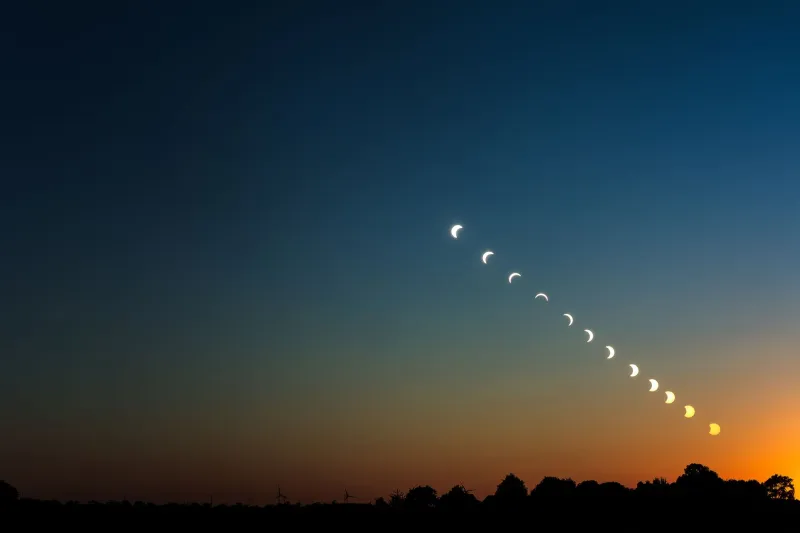
Let's talk about something that gets dismissed way too quickly in mainstream health conversations: the idea that your menstrual cycle and the moon cycle might actually be in conversation with each other.
We know — it sounds like the kind of thing that belongs on a crystal shop chalkboard. But stick with us, because the research is more interesting than you might expect, the traditional wisdom runs deep across nearly every human culture, and the practical applications for hormonal health, energy management, and fertility awareness are genuinely worth your time.
A 29.5-Day Coincidence?
Here's the number that stops most people in their tracks: the average human menstrual cycle runs approximately 29.5 days. The lunar cycle — from new moon to new moon — is exactly 29.5 days.
Now, correlation isn't causation, and no single data point proves a biological link. But this numerical overlap has fascinated researchers, anthropologists, and healers for millennia. Ancient cultures from the Maya to Indigenous North American nations to traditional Chinese medicine practitioners built their understanding of women's health around this parallel rhythm. The Sanskrit word for both menstruation and moon is chandra. In many European languages, the root words for "menstruation" and "moon" are linguistically identical.
This wasn't coincidence — it was observation. Generations of careful, attentive human observation.
What the Science Actually Says
A landmark study published in Science Advances in 2021 analyzed long-term menstrual cycle data from 22 women over several years and found compelling evidence of periodic synchronization between menstrual and lunar cycles — particularly gravitational and light-based lunar cycles. The researchers noted that longer cycles (over 27 days) showed the strongest synchronization patterns, and that synchrony tended to decrease with age and increased exposure to artificial light.
That last part is crucial. Artificial light — specifically the kind we're all swimming in 24/7 thanks to phones, laptops, and LED everything — appears to disrupt the biological sensitivity to moonlight that may have historically kept menstrual cycles more closely tethered to lunar rhythms.
Other research has examined melatonin's role as a potential mediating factor. Melatonin, the hormone that regulates sleep and is suppressed by light, also plays a documented role in reproductive hormone regulation. The full moon, which historically would have been the brightest nighttime light source available to humans, may have triggered subtle melatonin shifts that influenced LH (luteinizing hormone) surges and ovulation timing.
We're not saying the moon controls your period. We're saying the moon may have historically been one of several environmental cues that helped regulate it — and that modern life has largely severed that connection.
The Two Main Lunar Cycle Patterns
In contemporary lunar cycle wellness practices, two primary synchronization patterns are discussed:
The White Moon Cycle: Menstruation aligns with the new moon, and ovulation occurs around the full moon. This is often considered the "traditional" synchronization pattern — the one most frequently referenced in ancient texts. Energetically, it mirrors nature: the new moon is a time of inward turning and release, while the full moon is associated with peak energy, creativity, and outward expression. For those who follow this pattern, ovulation coincides with the moon's most energetically expansive phase.
The Red Moon Cycle: Menstruation aligns with the full moon, and ovulation occurs around the new moon. Historically, this pattern was associated with healers, teachers, and those whose creative or spiritual energy was directed outward during menstruation rather than inward. Neither pattern is "better" — they're simply different rhythms, and your body may shift between them across your lifetime.
Knowing which pattern you naturally fall into (or whether you're somewhere in between) can help you plan your month more intentionally — scheduling demanding work or social commitments during your higher-energy phases and protecting your lower-energy phases for rest and restoration.
Cycle Tracking Meets Lunar Awareness: A Practical How-To
You don't need a fancy app or a degree in astrology to start working with your lunar cycle. Here's a simple, accessible framework:
Step 1: Get a lunar calendar. There are dozens of free options online, and most period-tracking apps (like Clue or Flo) can be used alongside one. Note the new moon and full moon dates each month.
Step 2: Track your cycle with intention. Record not just the start and end of your period, but your energy levels, mood, sleep quality, libido, and any notable physical symptoms across the entire month. Do this for at least three cycles.
Step 3: Look for patterns. After a few months, lay your cycle data next to the lunar calendar. Do your energy peaks tend to fall around the full moon? Does your premenstrual phase seem to intensify around a particular lunar phase? The patterns won't be perfect, but they'll be informative.
Step 4: Start making micro-adjustments. If you notice your energy reliably dips in the days before your period (luteal phase), and that phase tends to fall during the waning moon, lean into the moon's own energy during that time — slower, quieter, more restorative. Use it as permission to rest rather than fighting your body's natural rhythm.
Supporting Your Hormones Through the Lunar Month
Beyond tracking, there are evidence-based lifestyle practices that support hormonal health throughout the cycle — practices that happen to align beautifully with lunar phase energy:
New Moon / Menstruation: This is a time for deep rest and release. Prioritize sleep, reduce intense exercise, and support your body with iron-rich foods (lentils, leafy greens, grass-fed red meat). Gentle yoga or walking is ideal. Limit alcohol, which significantly disrupts hormonal balance during menstruation.
Waxing Moon / Follicular Phase: Energy naturally rises as estrogen climbs. This is a great time for starting new projects, social connection, and higher-intensity workouts. Support estrogen metabolism with cruciferous vegetables like broccoli and Brussels sprouts.
Full Moon / Ovulation: Peak energy, peak fertility, peak social magnetism (estrogen and testosterone are both elevated). Lean into it. This is also the time when some women experience heightened emotional sensitivity — which tracks with the full moon's reputation for intensity.
Waning Moon / Luteal Phase: Progesterone rises and energy begins to taper. This is your body's natural wind-down phase. Magnesium-rich foods (dark chocolate, pumpkin seeds, almonds) help ease PMS symptoms. Prioritize sleep and reduce screens in the evening — your nervous system will thank you.
Why This Matters Beyond Fertility
It's worth being clear: lunar cycle awareness isn't just for people trying to conceive. It's a framework for understanding your own rhythms — for giving yourself permission to have different energy levels at different times of the month without pathologizing it.
So much of modern productivity culture asks us to perform at the same level every single day. That's not how hormones work. It's not how the moon works. And honestly? It's not how humans work.
Living in greater harmony with your cycle — whether or not it ever perfectly syncs with the moon — is about reclaiming a more honest, embodied relationship with your own biology. The moon is just a beautiful, ancient reminder that rhythms exist, that cycles matter, and that rest is not the opposite of productivity. It's the foundation of it.
Start where you are. Track what you notice. And let the moon be your calendar.