The Three Days Before the New Moon That Could Change Everything — If You Let Them
Everybody talks about the new moon like it's the starting gun. Set your intentions! Plant your seeds! Start fresh! And yes, the new moon is a genuinely powerful moment. But there's a quieter, stranger, more overlooked phase that comes right before it — and honestly? It might be doing more heavy lifting than we give it credit for.
Welcome to the dark moon.
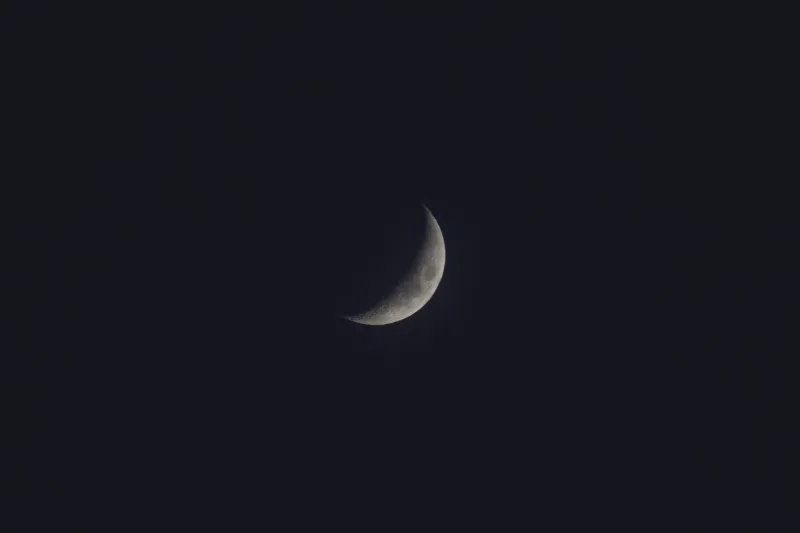
This is the 1-3 day window before the new moon, when the lunar disk is essentially invisible in the night sky. No crescent, no glow, nothing. Just darkness. To modern eyes, it looks like nothing is happening. To ancient cultures across the globe, it was one of the most sacred and strategically important phases in the entire lunar calendar.
What Even Is the Dark Moon?
A lot of people use "dark moon" and "new moon" interchangeably, but they're not quite the same thing. The new moon is the precise astronomical moment when the moon sits between Earth and the sun. The dark moon is the 1-3 days leading up to that moment — sometimes called the "balsamic moon" in astrology — when the moon is so deeply waning that it's essentially invisible.
Think of it like this: the new moon is the moment of rebirth. The dark moon is the labor that makes that rebirth possible. It's the cocoon phase, the void, the deep exhale before everything starts again.
And across human history, people took that seriously.
What Ancient Cultures Actually Did During This Time
Archaeological and anthropological research has turned up some genuinely fascinating patterns around how pre-modern societies used these dark lunar days — not as a time to push forward, but as a time to withdraw, release, and prepare.
In ancient Mesopotamia, where some of the earliest lunar calendars were developed, the days just before the new moon were considered spiritually sensitive. Babylonian texts suggest that major decisions — trade agreements, military movements, marriages — were deliberately avoided during this window, not because it was unlucky per se, but because it was understood as a liminal time, a threshold between cycles where ordinary rules didn't quite apply.
Greek tradition associated the dark moon with Hecate, the goddess of crossroads, magic, and transitions. Her sacred night was specifically observed during this moonless phase, and rituals honoring her were focused on releasing what no longer served — old grudges, bad habits, relationships that had run their course. Offerings were left at crossroads (a literal symbol of the in-between) during these nights.
Among many Indigenous North American communities, the lunar cycle was woven deeply into ceremonial timing. While practices varied widely across nations, ethnographic accounts from the 19th and early 20th centuries document that certain healing ceremonies and purification rituals were deliberately timed to the dark and new moon phases, with the dark period used specifically for internal preparation — fasting, prayer, and what we might today call shadow work — before the renewal ceremonies of the new moon.
In traditional Chinese medicine, the dark moon was associated with maximum yin energy — the most inward, receptive, and restorative point of the cycle. Practitioners historically recommended reduced physical activity, more sleep, and introspective practices during this time, viewing it as the body's natural moment of deep restoration.
The through-line across all of these traditions? The dark moon is not a time for action. It's a time for honest reckoning.
Shadow Work and the Dark Moon: Why the Timing Actually Makes Sense
Shadow work — the process of examining the parts of yourself you tend to hide, deny, or project onto others — is hard. It requires a kind of psychological courage that's genuinely easier to access when you're not fighting against your own energy.
Here's what's interesting from a modern wellness perspective: research on circadian and infradian rhythms suggests that our bodies naturally move through cycles of high output and deep restoration. The dark moon, falling at the end of the lunar cycle, often coincides with a natural dip in energy and a pull toward inwardness. Rather than fighting that pull with productivity culture's insistence that every day should look the same, working with it — using that natural withdrawal for reflection — is actually a really elegant form of self-care.
The dark moon essentially gives you permission to go inward. And when you're already naturally turned inward, shadow work becomes less of a forced excavation and more of a gentle uncovering.
Journaling Prompts for the Dark Moon Window
If you want to work with this phase intentionally, journaling is one of the most accessible tools available. These prompts are designed specifically for the dark moon's energy — they're not about goals or planning. They're about honest looking.
Releasing prompts:
- What belief about myself have I been carrying that I know, deep down, isn't true anymore?
- Where in my life am I staying in something out of fear rather than genuine desire?
- What would I do differently if I truly believed I deserved better?
Shadow prompts:
- What quality in other people irritates me most right now — and where does that quality live in me?
- What am I most afraid people would think if they knew the whole truth?
- What part of my past am I still punishing myself for?
Preparation prompts:
- If I could release one thing before the new moon arrives, what would it be?
- What does the next version of me look like — and what does she need me to let go of first?
Don't rush these. The dark moon isn't the time for tidy answers. Let things be messy and incomplete. That's kind of the whole point.
A Simple Dark Moon Meditation
You don't need candles or crystals for this (though you're absolutely welcome to use them if that's your thing). Find a quiet space, ideally in the evening, and try this:
- Sit comfortably and close your eyes. Take five slow, deep breaths, extending the exhale longer than the inhale.
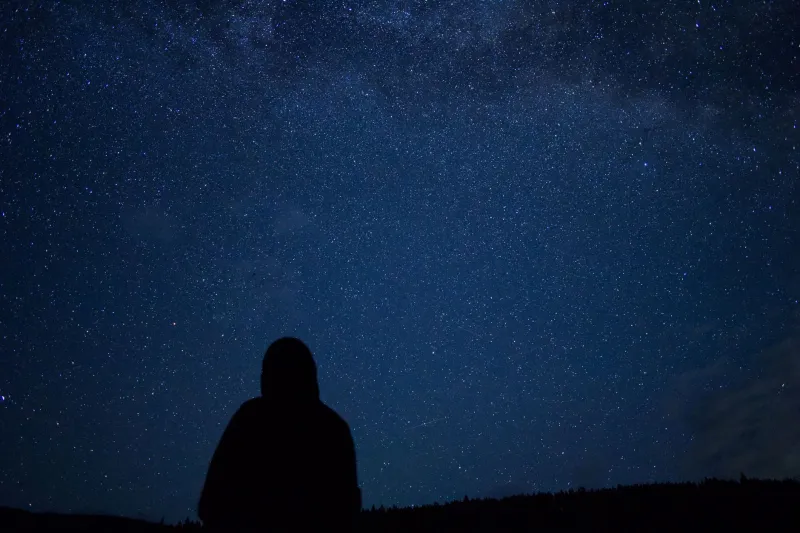
- Visualize the night sky — completely dark, moonless. Feel the quality of that darkness. Not threatening. Just still.
- Ask yourself quietly: What am I ready to release? Don't force an answer. Just hold the question.
- When something surfaces — an emotion, a memory, a pattern — don't analyze it. Just acknowledge it. You might say internally, I see you. I'm ready to let you go.
- Spend a few minutes breathing into that release. Then slowly bring your awareness back to the room.
This practice takes maybe 10-15 minutes, and doing it for even one or two nights during the dark moon window can feel surprisingly powerful.
Setting Yourself Up for the New Moon
Here's the thing about the dark moon that makes it so worth paying attention to: what you release during this phase directly shapes how much space you have for what's coming. You can't fill a cup that's already overflowing. The dark moon is your chance to empty it — intentionally, consciously, on your own terms.
The new moon gets all the hype. But the dark moon? That's where the real work happens. And if you've been wondering why your new moon intentions don't always take root the way you hope, it might be worth asking whether you've been skipping the clearing that makes them possible.
The darkness isn't something to rush through. It's something to sit with. Even just for a few quiet evenings before the moon returns — that stillness has something to teach you.