Your Cycle Doesn't Owe the Moon an Apology — Here's What Syncing Culture Gets Wrong
If you've spent any time in wellness communities — online or off — you've probably encountered some version of this idea: that a truly attuned woman bleeds with the new moon and ovulates with the full moon. It sounds poetic. It sounds ancient. And honestly, it sounds really good when you're trying to make sense of your body and the world around you.
But here's the thing: it might also be doing you quiet harm.
Not in a dramatic, crisis-level way. More in the subtle way that any framework harms you when it makes you feel broken for simply being who you are. So let's slow down, look at what we actually know, and figure out how to work with the moon without turning your uterus into a homework assignment.
Where Did This Idea Even Come From?
The 29.5-day lunar cycle and the average 28-day menstrual cycle are close enough in length that humans have been drawing connections between them for thousands of years. Ancient cultures across the globe — from Indigenous communities in the Americas to early European traditions — wove moon symbolism into their understanding of fertility, blood, and womanhood.
In the 1970s, researcher Eugen Jonas proposed that women's fertility was tied to the lunar phase under which they were born. Later, Miranda Gray's influential book Red Moon popularized the idea of two archetypal cycle types: the "White Moon" cycle (bleeding at the new moon, ovulating at the full) and the "Red Moon" cycle (bleeding at the full moon). These frameworks resonated deeply with people who were hungry for a more embodied, spiritual relationship with their bodies.
And that hunger? Completely valid. The problem isn't the longing — it's when the framework hardens into a standard.
What the Research Actually Shows
Here's where things get interesting. A large-scale 2021 study published in npj Digital Medicine analyzed data from over 22,000 menstrual cycles tracked through a period app. The findings were pretty clear: there was no consistent, statistically significant relationship between menstrual cycle timing and lunar phases.
Cycles varied widely — from 21 to 35 days being considered within the normal range — and they didn't cluster around new or full moons in any meaningful pattern. An earlier 1979 study by Winnifred Cutler did suggest some correlation, but it's been difficult to replicate under more rigorous conditions.
Does this mean the moon has zero influence on human biology? Not necessarily. Some researchers have pointed to possible effects on sleep — lunar phase may subtly shift sleep architecture, which could theoretically ripple into hormonal patterns over time. But "theoretically possible" is a long way from "your period should arrive on the new moon or something's off."
The Hidden Cost of the "Sync" Narrative
When we tell people their cycles should align with the moon, we accidentally create a new wellness benchmark — and benchmarks have a way of making people feel inadequate.
Imagine someone already navigating PCOS, perimenopause, postpartum hormonal shifts, or the aftermath of hormonal birth control. Their cycle might be 34 days, or 19 days, or genuinely unpredictable. They're already managing a relationship with their body that requires patience and self-compassion. Layering on the message that a "spiritually aligned" cycle bleeds at the new moon? That's not healing. That's just a different kind of pressure.
And let's be honest — the original frameworks were also built around a very narrow definition of "woman" and reproductive experience. People who are trans, intersex, in menopause, or living with conditions that affect their cycles are often entirely absent from these conversations. The moon doesn't actually discriminate. Our frameworks do.
So Should You Just Ignore the Moon Entirely?
Absolutely not — and this is where things get genuinely interesting.
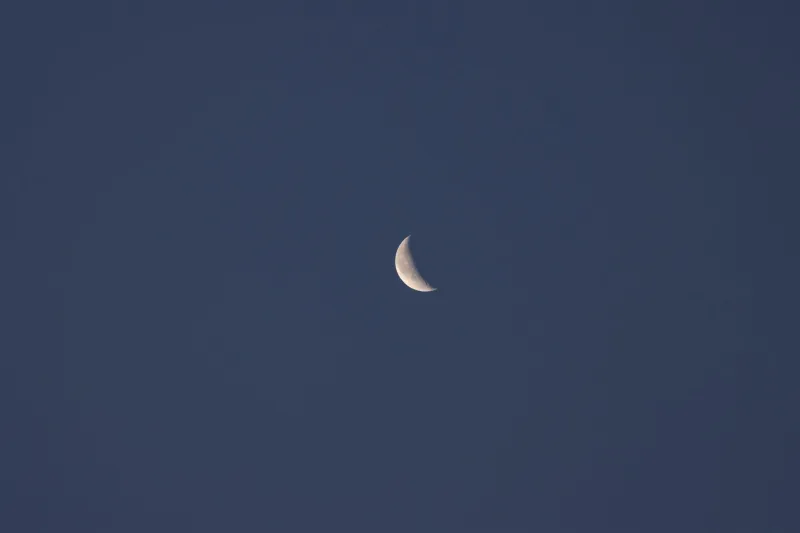
The moon's phases carry real energetic weight for a lot of people, and dismissing that because the biology doesn't line up perfectly would be throwing the baby out with the bathwater. The waxing moon as a time of building energy, the full moon as a peak of intensity and illumination, the waning moon as a space for release and rest — these are patterns that many people experience in their emotional and physical lives, whether or not their menstrual cycle matches the calendar.
The shift worth making is this: instead of trying to sync your cycle to the moon, try observing how your cycle interacts with the moon. These are very different practices.
A More Liberating Approach: Track Both, Force Neither
Start by keeping a simple dual log. Note your cycle phase — menstrual, follicular, ovulatory, luteal — alongside the current moon phase. Do this for two or three months without judgment. You're not looking for perfect alignment. You're looking for your patterns.
Maybe you notice that whenever you're in your luteal phase during a waning moon, your need for solitude doubles. Maybe your energy peaks during the full moon regardless of where you are in your cycle. Maybe you feel absolutely nothing in particular and that's also completely fine.
The point is that your body has its own intelligence, and the moon has its own rhythm, and sometimes they rhyme and sometimes they don't. Both can be honored without one having to dominate the other.
Working With Lunar Energy on Your Own Terms
Here are a few ways to engage with moon phase wellness that don't require your uterus to perform on cue:
New Moon: Use this as a reset point for intentions — around your health, your emotional life, your relationships. Whether you're bleeding or not, the new moon is a low-light, inward-facing energy that pairs well with journaling, rest, and gentle planning.
Waxing Phases: Great timing for starting new wellness habits, increasing physical activity, or leaning into social connection. If your follicular phase happens to overlap here, wonderful. If not, you can still ride the building energy.
Full Moon: A natural moment for reflection, celebration, or confronting what's been simmering below the surface. If this coincides with your luteal phase's emotional intensity, you might feel it more acutely — but you don't need that overlap for the full moon to mean something.
Waning Phases: Rest, release, and recovery. Perfect for reducing your load, doing a digital detox, or simply sleeping more. Again — your cycle doesn't need to match for this to be useful.
The Real Point Was Never Perfection
The traditions that connected menstruation to the moon weren't really about biological synchronization. They were about honoring cyclical life. About recognizing that human beings, like the moon, move through phases of fullness and emptiness, action and rest, visibility and retreat.
That wisdom doesn't require your period to arrive on a specific night. It just requires you to stop treating your body like it's failing when it refuses to perform on schedule.
The moon has been doing its thing for 4.5 billion years. Your body has been doing its own thing for your entire life. Maybe the most spiritual move is to let both of them be exactly what they are — and find the beauty in the places they accidentally rhyme.