Your Brain on the Waxing Crescent: The Lunar Window That Makes New Habits Actually Stick
Let's be honest: most of us have tried the whole "manifest it and it will come" approach, written our intentions on pretty paper, maybe burned some sage, and then watched nothing change by Thursday. It's not that intention-setting is fake. It's that we're missing a crucial ingredient — timing.
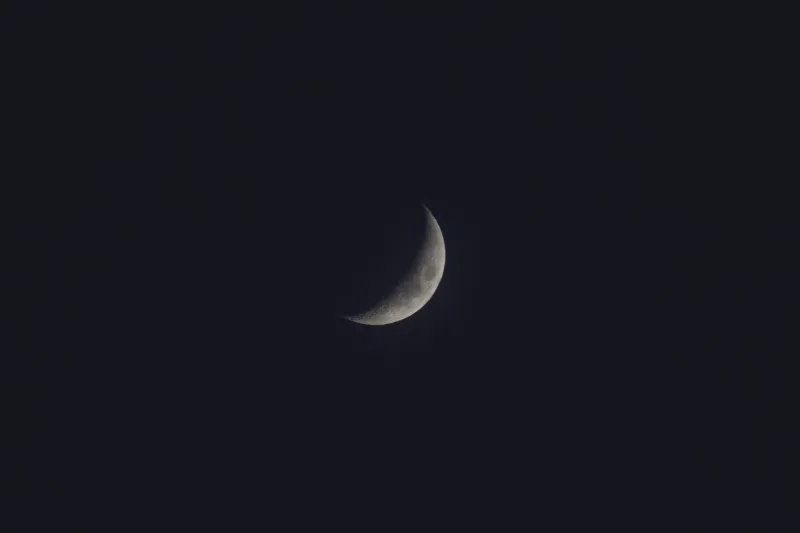
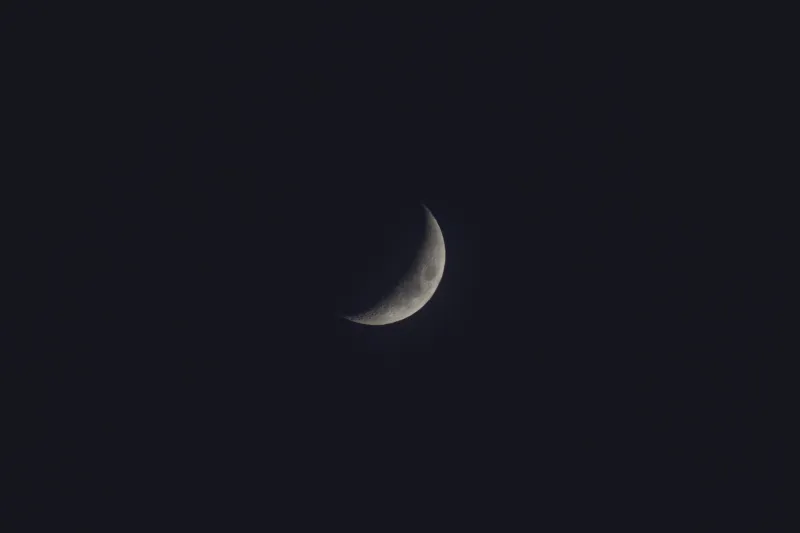
The waxing crescent moon, that delicate sliver of light that appears just a few days after the new moon, is one of the most underestimated phases in a lunar cycle. Spiritually, it's long been associated with momentum, seedling energy, and forward motion. But what's genuinely fascinating is how that ancient symbolism lines up with what cognitive neuroscience is telling us about when and how the brain is most primed to build new neural pathways.
So no, this isn't just moon magic for the sake of it. There's real physiology worth talking about here.
What's Actually Happening in Your Brain During This Phase
Neuroplasticity — your brain's ability to reorganize itself by forming new connections — isn't a constant, steady process. It's influenced by sleep quality, stress hormones, light exposure, and circadian rhythm shifts, all of which have documented relationships with the lunar cycle.
Research published in Science Advances found that human sleep patterns shift measurably across the lunar cycle, with people falling asleep later and getting less REM sleep in the days approaching the full moon. The waxing crescent sits right at the beginning of that arc — before sleep disruption peaks, when melatonin production is still relatively stable and the body hasn't yet ramped up into the heightened alertness that a brightening moon can trigger.
Why does that matter for habit formation? Because REM sleep is when your brain consolidates learning and emotionally processes new experiences. When you're sleeping well — which tends to happen more reliably in the new and waxing crescent window — your brain is literally better at cementing new behavioral patterns overnight.
Layers on top of that: the post-new moon phase is associated with a subtle uptick in dopaminergic activity in some cycle-tracking communities, though research is still emerging. Dopamine isn't just the "feel good" chemical — it's the engine behind motivation, goal-directed behavior, and the reward circuitry that makes habits self-reinforcing. Starting something new when your motivational neurotransmitters are trending upward just makes biological sense.
Why Willpower Is the Wrong Tool
Here's where a lot of wellness culture gets it sideways. We frame intention-setting as a willpower game — as if the person who succeeds is simply trying harder. But cognitive psychology has pretty thoroughly dismantled that idea.
Roy Baumeister's ego depletion research (even with its replications debate) pointed toward something real: the mental resources we use for self-control are finite within a given window. Relying on sheer grit to override ingrained patterns is exhausting, and it doesn't actually build new neural grooves — it just suppresses old ones temporarily.
What actually creates lasting change is environmental design, emotional resonance, and repetition timed to your brain's natural plasticity windows. That's exactly what a lunar framework can provide — not as a mystical override, but as a calendar system that keeps you aligned with your own biology.
The waxing crescent isn't asking you to try harder. It's asking you to start smarter.
The 21-Day Waxing Crescent Protocol
Here's a practical approach rooted in both lunar timing and what behavioral science actually supports for habit installation.
Days 1–3 (Waxing Crescent Onset): Plant With Precision
Don't start with ten intentions. Start with one — maybe two if they're deeply connected. Neuroscientist Andrew Huberman and others in the behavioral science space consistently emphasize that specificity is what separates goals that rewire the brain from goals that just feel good to write down.
Instead of "I want to feel healthier," try: "I will take a 20-minute walk after dinner on weekdays." The crescent window is your planting moment. Make it concrete enough that your brain knows exactly what neural pathway to start building.
Write it down physically. There's solid research showing that handwriting activates encoding in the brain more deeply than typing — something about the slower, more deliberate motor process.
Days 4–10 (Building Crescent Energy): Stack and Anchor
Habit stacking — attaching a new behavior to an existing one — is one of the most evidence-backed tools in behavior change. As the crescent grows, use this window to anchor your intention to something you already do automatically. Morning coffee becomes the trigger for your journaling. Brushing your teeth becomes the cue for your breathwork. The moon is building light; you're building grooves.
This is also a good time to set up your environment intentionally. Put your running shoes by the door. Clear the clutter off your meditation cushion. Your surroundings are sending your brain constant signals about what's expected — make those signals work for you.
Days 11–21 (Through First Quarter and Beyond): Protect the Streak
Research on habit formation (James Clear cites the average timeline as 66 days, not the mythical 21) suggests that the first three weeks are the most fragile. You haven't yet reached automaticity — the behavior still requires conscious choice.
This is where the lunar framework earns its keep as a ritual container. Checking in with the moon each evening — even just glancing at its phase on an app — creates a consistent environmental cue that keeps your intention emotionally alive. It's a micro-reminder that you're in a cycle, not just white-knuckling another week.
If you miss a day, the research is clear: don't catastrophize. One missed rep doesn't erase a neural pathway in progress. Acknowledge it, and show up the next day. The moon doesn't punish a cloudy night.
Making It Feel Real, Not Rigid
One thing we want to push back on here at Healing Moon Erin is the tendency to turn lunar wellness into another productivity system that makes you feel like you're failing. That defeats the entire point.
The waxing crescent is tender energy. It's the seedling pushing through soil — fragile, directional, alive. Honor that by being gentle with yourself as you start. The science supports the timing. The ritual supports your nervous system. And your intentions deserve both.
Light a candle if that helps you focus. Use a moon phase journal. Talk about your goal with someone you trust. Whatever makes the intention feel real and yours — that's the piece no protocol can hand you.
One Last Thing Before the Moon Gets Brighter
The waxing crescent is only visible for a short window each evening, low on the western horizon just after sunset. There's something poetic about that — this phase asks you to pay attention at a specific moment, in a specific direction, before the light fades.
Your intentions work the same way. They need a moment of genuine focus, pointed in a real direction, before the noise of daily life takes over. The moon is just reminding you to show up for that moment.
This cycle, try letting timing do some of the heavy lifting. Your willpower can rest.