Dissolving Before the Dawn: How to Actually Survive (and Embrace) the Dark Moon's Liminal Days
You're Not Falling Apart — You're Between Moons
There's a specific kind of tired that shows up a few days before the new moon. It's not the satisfying exhaustion of a good workout or a productive week. It's more like... fog. Like your internal GPS lost signal. Like you started a sentence and completely forgot where it was going.
If you've ever chalked this up to burnout, hormones, or just a weird patch — you might be partially right. But there's another layer worth looking at. Those two to three days before the new moon, when the moon goes almost completely dark in the sky, are known in many spiritual and lunar traditions as the dark moon phase. And they hit differently than any other point in the lunar cycle.
Most of the wellness content out there focuses on the new moon as the fresh start, the clean slate, the moment to set your intentions and light your candles. And that's beautiful. But we don't talk nearly enough about the days leading up to it — the ones that feel like limbo, like you're hovering in some in-between space that doesn't have a name yet.
Let's give it one.
What the Dark Moon Actually Is (It's Not the Same as the New Moon)
Here's something a lot of people don't realize: the new moon and the dark moon aren't exactly the same thing. The new moon is the precise astrological moment when the sun and moon align in the same zodiac sign — it's a specific point in time, often just a few hours long.
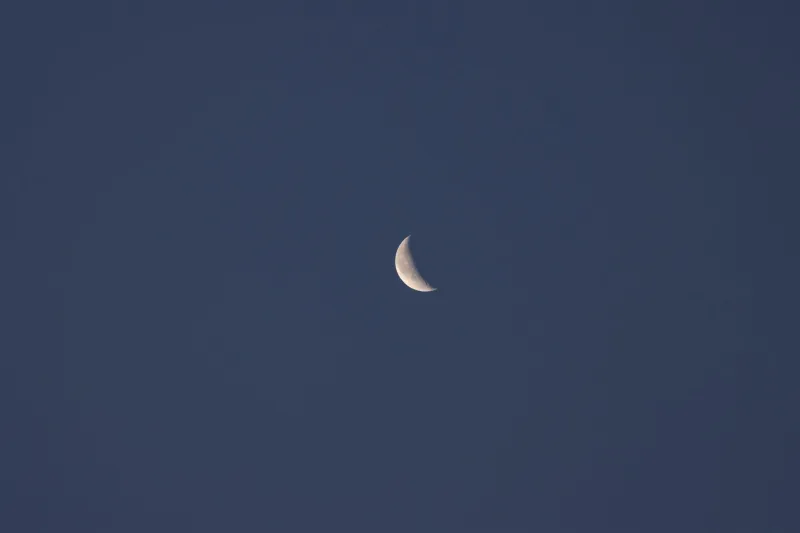
The dark moon refers to the roughly two to three days before that alignment happens, when the moon is no longer visible in the night sky. She's not gone — she's just not reflecting any sunlight back to us. She's traveling between her old self and her next beginning.
That distinction matters because the energy of those dark moon days is genuinely different from the new moon energy that follows. Where the new moon is about initiating and planting seeds, the dark moon is about something older and quieter: dissolution, surrender, and the courage to not-know for a little while.
Why These Days Feel So Destabilizing
Let's get into the real stuff — because if you've felt genuinely off during the dark moon, you're not imagining it.
From a physiological standpoint, some researchers and integrative health practitioners have noted that lunar cycles may influence circadian rhythms, sleep architecture, and even cortisol patterns. While the science is still emerging and often contested, many people report that the days leading up to the new moon bring disrupted sleep, lower energy, and heightened emotional sensitivity. Without the moon's reflected light (even subtle amounts), there's a theory that our melatonin production and sleep cycles may shift slightly — leaving us more fatigued and internally restless.
From a nervous system perspective, the dark moon days often coincide with a kind of low-grade hypervigilance. You might feel more reactive, more prone to old anxieties surfacing, or like your emotional skin is just thinner than usual. This isn't weakness — it's actually your system doing exactly what it's designed to do during a threshold moment. Liminal spaces, by definition, are where old structures have dissolved but new ones haven't formed yet. Your nervous system reads that as uncertainty, and uncertainty triggers alertness.
Spiritually, nearly every ancient tradition that worked with lunar cycles recognized this phase as sacred — and intentionally set apart. In ancient Rome, the days before the new moon were called the dies atri, or dark days, and were considered unsuitable for beginning new ventures. Many Indigenous traditions across North America treated this lunar threshold as a time for introspection and ceremony rather than action. The Taoists spoke of wu wei — the power of non-doing — and the dark moon is perhaps the most natural expression of that principle in the lunar calendar.
When you fight the dark moon energy by trying to be productive, social, or decisive, you're essentially swimming upstream against a current that's specifically designed to slow you down.
The Gifts Hidden in the Limbo
Here's the reframe that might actually change how you experience this phase: the dark moon isn't asking you to disappear. It's asking you to decompress.
Think of it like the space between exhale and inhale. There's a moment after you've fully breathed out where your lungs are empty and you haven't yet drawn new breath. That moment isn't nothing — it's actually where the reset happens. The dark moon is that pause for your whole energetic system.
Some of the most powerful inner work you can do happens during these days, precisely because the usual noise is quieter. Old patterns that were running on autopilot become more visible. Emotions you've been too busy to feel start to surface. Dreams get stranger and more symbolic. Creativity often shows up sideways — not as a polished idea, but as a weird feeling or an image that won't leave you alone.
If you can soften your grip on productivity during these days, you might find they're actually rich with information.
Practices That Help You Thrive in the Dark
Thriving here doesn't mean loving every second of it. It means not making it worse by fighting what it is.
1. Slow your schedule down, for real. This isn't just a vibe suggestion. If you can, move meetings, postpone big decisions, and clear social obligations during the two days before the new moon. Even a 20% reduction in external demands during this window can make a significant difference in how you feel.
2. Work with yin practices. This is the time for restorative yoga, long baths, slow walks, and anything that signals safety to your nervous system. Intense workouts, high-stimulation environments, and fast-paced social situations will likely leave you more depleted than usual.
3. Do a dark moon release ritual. Before the new moon arrives with its fresh energy, use the dark moon to consciously let go. This can be as simple as writing down what you're ready to release — a habit, a story you've been telling yourself, a relationship dynamic — and burning or burying the paper. The act of intentional release creates space for what's coming.
4. Eat grounding, nourishing foods. Root vegetables, warm broths, healthy fats, and mineral-rich foods all support your system when it's in this more vulnerable state. Avoid stimulants and alcohol if you can — your system is already processing enough.
5. Track your dark moon patterns over several cycles. Keep a simple journal. Note your energy, mood, sleep quality, and any recurring themes or emotions during these days. Over three to four lunar cycles, patterns will emerge that are specific to you — and that self-knowledge is genuinely powerful.
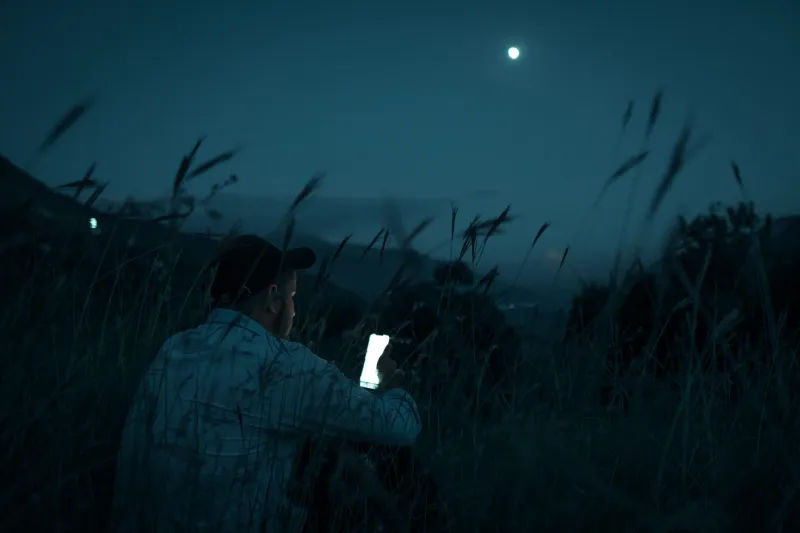
6. Lean into the not-knowing. This one's the hardest. The dark moon asks you to be okay with uncertainty, with incompletion, with the answer not being available yet. Meditation, breathwork, or even just sitting outside in the dark for a few minutes can help you build tolerance for that liminal discomfort.
You Were Made for This, Too
Our culture has a serious bias toward beginnings and peaks. New moons get the vision boards. Full moons get the rituals. But the dark moon — this strange, invisible, in-between space — is where the real composting happens. It's where the old cycle finishes its work so the new one can actually be new.
You don't have to love the dark moon days. But when you stop treating them like a problem to push through and start treating them like a phase to move with, something genuinely shifts. You stop losing three days of every month to confusion and exhaustion. You start arriving at the new moon actually ready — not just pretending to reset while still carrying everything from the cycle before.
The moon goes dark so she can start over clean. Maybe that's an invitation for you to do the same.