Something Shifts Three Days Before the Full Moon — Your Nervous System Knows It Before You Do
You know that feeling. It's not quite anxiety, not quite excitement. It's like your whole body got turned up a notch — your thoughts are louder, your sleep is lighter, and small things that normally roll right off you suddenly feel enormous. You check your calendar, and sure enough: the full moon is three days out.
This isn't woo. Or rather, it's not only woo. There's a growing body of research — and a whole lot of lived experience — suggesting that the waxing gibbous phase, that swelling, almost-full moon, creates measurable shifts in human biology. Your nervous system doesn't need a lunar calendar to feel it. It's already tracking.
What Is the Waxing Gibbous Phase, Exactly?
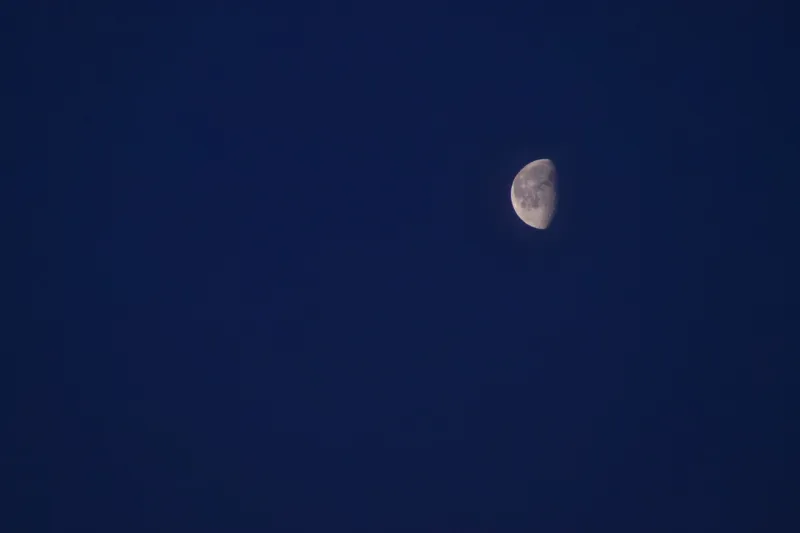
The waxing gibbous sits between the first quarter moon and the full moon — roughly days 10 through 14 of the lunar cycle. The moon is more than half illuminated but hasn't yet reached peak fullness. Energetically, many traditions describe this as a time of building pressure, anticipation, and amplification. What you started at the new moon is now fully in motion, gaining momentum whether you're ready or not.
From a biological standpoint, this phase is interesting precisely because of what's about to happen. Your body is already responding to the approaching peak.
The Light Factor: More Than Just Brightness
Here's something most people don't think about: the nights leading up to a full moon are significantly brighter than the nights after it. That increasing nocturnal light has a direct effect on your circadian rhythm — the internal 24-hour clock that regulates everything from cortisol release to melatonin production to immune function.
A 2021 study published in Science Advances found that people fell asleep later and slept fewer total hours in the days before the full moon, regardless of whether they were in urban or rural environments. The researchers concluded that human sleep patterns show a clear lunar signature — and that pre-full moon nights may be the most disruptive.
Less melatonin means more cortisol. More cortisol means a nervous system that's primed for alertness. That's great if you're a prehistoric human who needs to stay vigilant during a bright night. It's less great when you're trying to get through a Tuesday without snapping at your coworkers.
The Electromagnetic Angle (Yes, Really)
The moon's gravitational pull affects Earth's electromagnetic field, and some researchers have suggested that humans — whose brains and hearts generate their own electromagnetic fields — may be sensitive to these fluctuations. While this area of research is still emerging and often controversial in mainstream science, it aligns with what practitioners of traditional Chinese medicine and Ayurveda have observed for centuries: that the body's energetic state shifts with the lunar cycle.
The nervous system, particularly the autonomic nervous system, is exquisitely sensitive to environmental cues. It's not a stretch to consider that subtle geomagnetic changes could influence sympathetic nervous system activation — the branch responsible for your fight-or-flight response. If your baseline stress response is already elevated by sleep disruption and cortisol fluctuations, even minor environmental signals can tip the scale toward anxiety.
Why Some People Feel This More Than Others
Not everyone spirals before a full moon. But certain people seem to be more tuned in — and that sensitivity isn't a flaw, it's information.
Highly sensitive people (HSPs), those with existing anxiety disorders, people who are already sleep-deprived, and individuals going through hormonal transitions (hello, perimenopause) tend to report more pronounced lunar sensitivity. If your nervous system is already running hot, the waxing gibbous phase can feel like someone turned the volume up on everything.
Women who track their menstrual cycles alongside lunar phases often notice that when their luteal phase overlaps with the pre-full moon window, the emotional intensity can feel almost unbearable. Both cycles independently elevate stress hormones and reduce resilience to emotional triggers — stacked together, they're a lot.
Herbal Allies for the Pre-Full Moon Window
This is where plant medicine earns its place at the table. A few well-chosen herbs can meaningfully support your nervous system during this activated phase without dulling your senses or flattening your energy.
Passionflower (Passiflora incarnata) is one of the most underrated nervines in the Western herbal tradition. It works by gently modulating GABA receptors — the same pathway many anti-anxiety medications target, but with a much softer touch. A cup of passionflower tea in the evening during the waxing gibbous phase can help quiet the mental noise without making you feel foggy.
Ashwagandha (Withania somnifera) is an adaptogen with solid clinical backing for reducing cortisol levels and supporting the HPA axis — the stress response system that gets overactivated when your sleep is disrupted. Taking ashwagandha consistently through the second half of your lunar cycle (roughly from first quarter through full moon) can help build resilience before the peak hits.
Lemon balm is another gentle option, particularly useful if your anxiety shows up as racing thoughts or a tight chest. It pairs beautifully with passionflower in a bedtime tea blend.
As always, check with your healthcare provider before adding new supplements, especially if you're on medications or managing a chronic condition.
Grounding Practices That Actually Work During This Phase
The impulse when anxiety spikes is often to do more — more research, more planning, more processing. The waxing gibbous moon already has momentum energy built in, and adding mental effort on top of a revved-up nervous system usually backfires.
Instead, try moving down and in:
Earthing (barefoot grounding): Walking barefoot on grass, soil, or sand has been shown in several small studies to reduce cortisol and improve mood. There's something poetically right about literally connecting to the earth when the sky is pulling your energy upward.
Legs-up-the-wall pose (Viparita Karani): This restorative yoga posture activates the parasympathetic nervous system almost immediately. Ten minutes before bed during the pre-full moon window can meaningfully shift your sleep quality.
Slow, extended exhale breathing: The exhale activates the vagus nerve and downregulates sympathetic activation. Try a 4-count inhale and an 8-count exhale for five minutes. It sounds almost too simple, but the physiological effect is real.
Journaling with a boundary: Give yourself 15 minutes to write down everything that's swirling around in your head — worries, to-do lists, emotional loops — and then close the journal. This externalizes the mental noise without feeding it.
Aligning Your Schedule With the Lunar Rhythm
One of the most practical things you can do is simply expect this phase to feel more intense — and plan accordingly. Avoid scheduling high-stakes conversations, major decisions, or emotionally demanding commitments in the three days before a full moon if you can help it. This isn't avoidance; it's strategy.
Use this window for creative work, physical movement, and anything that channels the building energy productively. The waxing gibbous is genuinely good for momentum — just keep the output focused outward (action, creativity, movement) rather than inward (rumination, worry, overthinking).
You're Not Too Sensitive — You're Just Paying Attention
The cultural narrative around anxiety often frames sensitivity as weakness or dysfunction. But what if your nervous system's response to the lunar cycle is actually a sign that you're deeply attuned to your environment — and that you just need the right tools to work with that attunement instead of against it?
The moon isn't doing something to you. It's doing something with you. Learning to read that rhythm, support your biology through the activated phases, and give yourself permission to slow down when your system needs it — that's not superstition. That's wisdom.
And three days from now, when that full moon rises and you feel surprisingly okay, you'll know exactly why.